The School of Systems and Technology (SST) at the University of Management and Technology (UMT) successfully organized the International Conference on Frontiers in Computer Science (ICFCS), at Hakeem Saeed Hall, UMT. The conference brought together academics, researchers, industry professionals, and students to explore emerging advancements in computer science, artificial intelligence, and modern computing technologies. It aimed to promote research culture, innovation, and knowledge sharing while providing a platform for participants to present their work and receive valuable feedback from experts.
The opening session of the conference was addressed by the Dean SST, Prof. Dr. Atif Alvi, who welcomed the participants and highlighted the significance of research-driven learning in computer science. He emphasized the importance of aligning academic research with real-world technological challenges and strengthening collaboration between academia and industry. The session set a positive direction for the conference, encouraging participants to contribute toward innovative and impactful research in the field of computing.
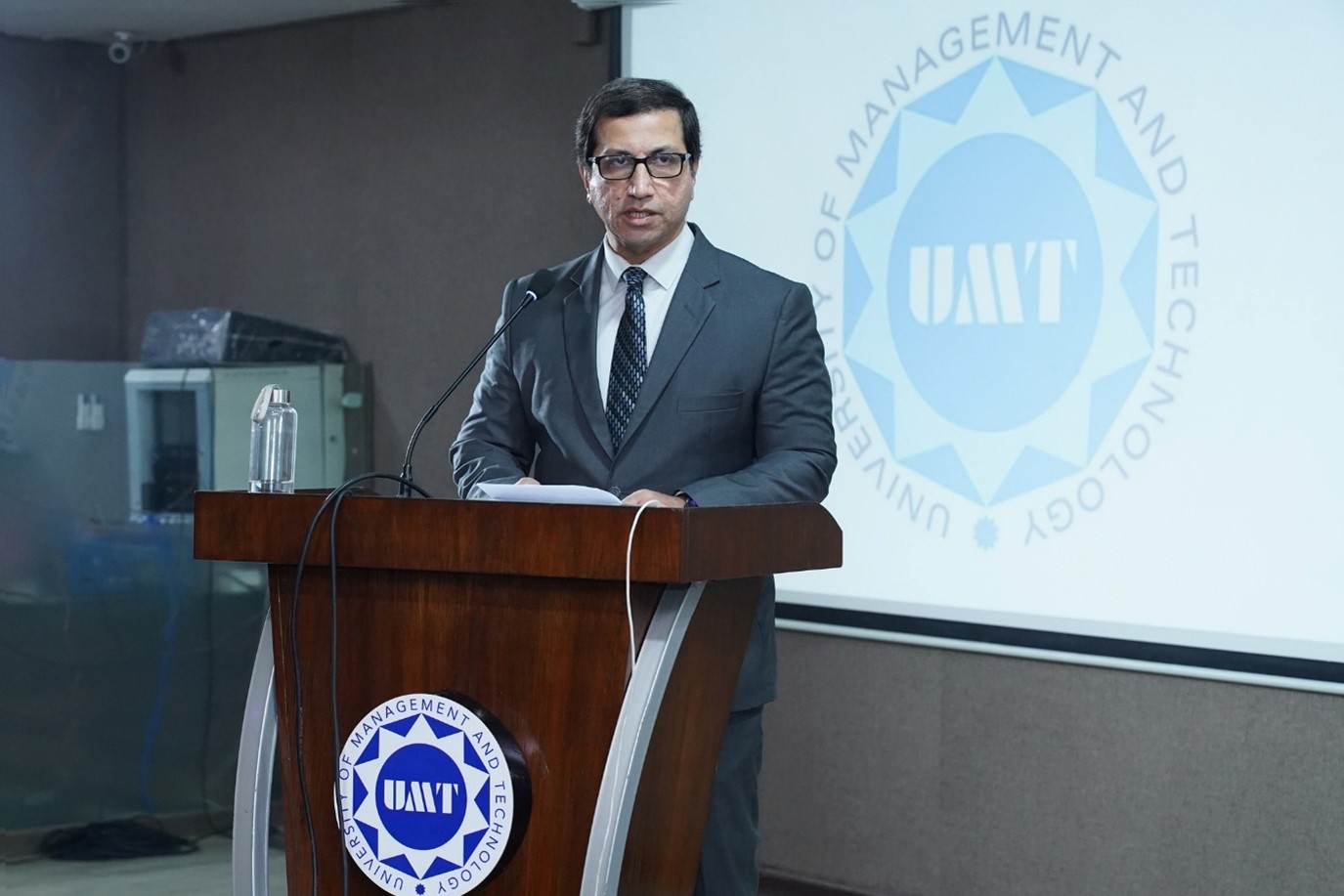
The conference was further graced by the address of the Rector UMT, Dr. Asif Raza, who appreciated the efforts of the School of Systems and Technology in organizing such a high-impact academic event. He highlighted the growing importance of computer science, and emerging technologies in shaping the future of education, industry, and society. He also encouraged students and researchers to focus on innovative, solution-oriented research that addresses real-world challenges and contributes to national and global development.
A key highlight of the conference was the keynote talk delivered by Dr. Ijaz Akhter, Senior Research Scientist at Motive, who engaged the audience with his insightful session on “Safe Roads through Visual Intelligence: How Computer Vision Powers Fleet Safety at Motive.” He discussed how computer vision and AI-based systems are transforming fleet safety and enabling smarter, data-driven decision-making in real-world applications.
The conference sessions were organized into two main segments, featuring a combination of Tech Talks, Tech Competitions, Workshops, and the 3-Minute Thesis (3MT) Competition. These activities were designed to enhance academic learning, practical exposure, and research communication skills among participants, providing them with opportunities to engage in both technical and research-oriented experiences at ICFCS 2025.
Tech Talks:
The Tech Talks session provided an interactive platform where experts and speakers shared insights on emerging technologies, research trends, and real-world applications of computer science. Held at Hakeem Saeed Hall, this session encouraged academic discussion and knowledge exchange between students, researchers, and industry professionals. It focused on bridging the gap between theoretical concepts and practical innovation in the field of computing.
Tech Competitions:
The Tech Competitions included a Web Hackathon, Speed Programming Competition, and Quiz Competition. These activities challenged students to apply their technical knowledge, problem-solving skills, and creativity under time constraints. The competitions highlighted innovation and teamwork, allowing participants to demonstrate their ability to develop efficient solutions and compete in a dynamic, high-pressure environment.
Workshops:
A series of hands-on workshops were conducted on modern and industry-relevant topics, including AWS Foundations, DevSecOps for Market-Ready Graduates, Game Development, Blockchain Fundamentals, Ethical Hacking & Resilient Defense, The API Starter Lab, and Research Essentials with AI. These workshops provided practical exposure to cutting-edge tools and technologies, helping participants strengthen their technical and research capabilities for real-world applications.
3-Minute Thesis (3MT) Competition:
The 3-Minute Thesis (3MT) Competition focused on research communication, where students presented their research ideas in a concise three-minute format. This competition showcased participants’ ability to explain complex research problems clearly and effectively. It highlighted innovation, analytical thinking, and academic depth, reflecting the core spirit of ICFCS where ideas are transformed into impactful and meaningful research contributions.
Panel Discussion:
A thought-provoking panel discussion was also held on the theme “Who owns the digital future? Data, Talent or Technology in the age of global competition,” which explored the evolving dynamics of digital ownership and global competitiveness. The session was moderated by the Panel Moderator and included diverse perspectives from:
-
Panelist 1: Dr. Ali Hammad Akbar, Professor Dept. of Computer Engineering, UET Lahore
-
Panelist 2: Mr. Yaser Awan, Member Advisory Committee, Pakistan Startup Fund
-
Panelist 3: Mr. Ghulam Nabi, Director General, HEC
-
Panelist 4: Mr. Ahmad Zafar Khan, Student/Alumni, UMT
Each panelist contributed valuable insights on how data, skilled talent, and advanced technologies collectively shape the digital future. The discussion highlighted the importance of collaboration among all stakeholders to ensure sustainable growth, innovation, and competitiveness in the rapidly evolving digital era.
Closing Ceremony
The conference concluded with the Closing Ceremony held at Hakeem Saeed Hall. The session began with closing remarks by the Chairperson, Dr. Malik Tahir Hassan, who appreciated the efforts of organizers, speakers, volunteers, and participants for making the event a success. He also shared a brief summary of the day, highlighting key academic and technical activities conducted throughout the conference.
The ceremony further included the distribution of souvenirs to invited speakers and distinguished guests as a token of appreciation. Certificates were also awarded to the organizing team in recognition of their dedicated efforts. The event officially concluded with a group photo session featuring volunteers and the organizing committee, marking the successful end of ICFCS.