International Conference on Emerging Trends in Infocybernetics-ICETI 2025
Wednesday, November 19 2025
The Department of Informatics and Systems at the University of Management and Technology successfully organized the International Conference on Emerging Trends in Infocybernetics (ICETI 2025), bringing together distinguished academics, industry leaders, researchers, and students on a dynamic platform to explore and discuss the future of information technology, cybersecurity, artificial intelligence, and emerging digital systems.
ICETI 2025 served as a significant forum for bridging the gap between academia and industry through insightful discussions on technologies shaping the digital world. The conference highlighted a diverse range of themes, including intelligent networks, machine learning, cybersecurity, and no-code automation, reflecting the evolving technological landscape and Pakistan's growing digital ambitions.
The event featured keynote addresses by renowned experts, technical paper presentations, interactive workshops, and engaging discussions aimed at fostering innovation, research excellence, and collaborative problem-solving. Through ICETI 2025, the Department of Informatics and Systems reaffirmed its commitment to nurturing future technology leaders and contributing meaningfully to Pakistan's knowledge economy and technological advancement.
Opening Ceremony
The conference began in the most meaningful way, with the recitation of the Holy Quran. The recitation brought a moment of calm and reflection to the hall, grounding the day's proceedings in purpose and gratitude. It was a reminder that knowledge, at its best, is a pursuit that begins with humility and sincerity of intention.
The National Anthem of Pakistan followed, filling Hakeem Saeed Hall with a collective sense of pride and responsibility. As the anthem played, attendees stood in unity, a moment that quietly underscored why events like ICETI matter: because the work done in these halls, the research presented, and the ideas exchanged are ultimately in service of this nation and its people.
Welcome Address by Dr. Atif Alvi — Dean & Professor of Computer Science, School of Systems and Technology, UMT
Dr. Atif Alvi — Dean, School of Systems and Technology, UMT
With the formal opening rituals complete, the stage was set for Dr. Atif Alvi, Dean and Professor of Computer Science at UMT, to deliver the Welcome Address and introduce ICETI 2025 to all in attendance.
Dr. Alvi is no stranger to the frontiers of technology. Holding a PhD in Computer Science from the University of Cambridge, his research spans pervasive computing, learning analytics, artificial intelligence, health informatics, and ontology, with over 922 citations reflecting the depth and reach of his scholarly contributions. His work has touched diverse domains, from blockchain-based agriculture supply chain solutions and IoT-driven industrial automation to gamified healthcare education and AI inclusion policy, work that has earned recognition globally, including a cover feature in the Communications of the ACM.
In his welcome address, Dr. Alvi set the tone for the entire day with clarity and conviction. He spoke about the urgency of infocybernetics as a discipline, one that sits at the critical intersection of information systems, cybersecurity, and intelligent technologies. He emphasized that ICETI 2025 is not merely an academic event but a declaration of intent: that the Department of Informatics and Systems at UMT is committed to producing research and leaders that are ready for the challenges of a rapidly digitizing world. He warmly welcomed every speaker, researcher, student, and guest in the room, and his words were both an invitation and a challenge, to engage deeply, think boldly, and leave with more than they came with.
Keynote Address by Mr. Hafiz Ali Mansoor Elahi — IT Head & Cyber Security Expert, Industrad Group
The energy in the hall shifted as Mr. Hafiz Ali Mansoor Elahi took the floor to deliver the keynote address, the intellectual centerpiece of ICETI 2025's opening session. His topic: "From Future Innovations to Personal Security: Preparing for the Next Digital World."
Drawing from years of hands-on experience as an IT Head and Cyber Security Expert at Industrad Group, Mr. Elahi opened a window into a world that most people interact with daily but rarely stop to examine critically, the digital world we are building around ourselves and the very real vulnerabilities embedded within it. He walked the audience through the breathtaking pace of technological change, artificial intelligence, cloud computing, the Internet of Things, and how each new layer of innovation, while powerful, also expands the surface area for attack and exploitation.
His message was direct and urgent: security is no longer an afterthought or the exclusive concern of IT departments. In the next digital world, every individual, every organization, and every institution must take ownership of their digital safety. He outlined emerging threat landscapes, the psychology of cyber attackers, and the frameworks that forward-thinking organizations are using to stay ahead. The keynote was a wake-up call wrapped in a roadmap, leaving attendees both sobered by the scale of the challenge and energized by the clarity of direction.
Presentation of Souvenir to Keynote Speaker & Group Photo
In recognition of his outstanding keynote address, a souvenir was presented to Mr. Hafiz Ali Mansoor Elahi by the organizing team, a token of appreciation for sharing his expertise and time with the ICETI 2025 community. The moment was captured in a group photograph with the organizing committee, faculty members, and distinguished guests, marking the successful conclusion of the morning's opening ceremony.
A souvenir was presented to Mr. Hafiz Ali Mansoor Elahi in appreciation of his valuable address, followed by a group photograph with the organizing team and distinguished guests.
Attendees took a short break to refresh, network, and carry forward the conversations sparked by the keynote. The corridors buzzed with discussion as students approached speakers, colleagues reconnected, and new connections were formed, a reminder that some of the most valuable exchanges at a conference happen outside the formal sessions.
Session I
Session Chair: Dr. Amjad Hussain Zahid
Dr. Amjad Hussain Zahid — Associate Professor, Department of Informatics and Systems, School of Systems and Technology, UMT
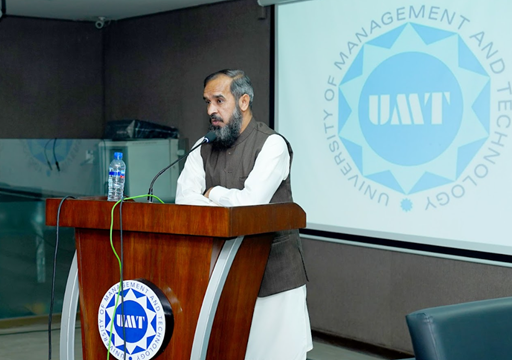
As the tea break concluded, attendees returned to Hakeem Saeed Hall for the first formal technical session of ICETI 2025, chaired by Dr. Amjad Hussain Zahid. A specialist in Information Security, Cryptography, and Advanced Algorithm Analysis, Dr. Zahid holds a PhD from the University of Engineering and Technology (UET), Lahore, and brings over 23 years of academic and professional experience to his work. His published research on symmetric block ciphers, S-Box construction, and substitution-permutation structures has contributed meaningfully to the mathematical foundations of modern encryption. An active member of HEC's National Curriculum Revision Committee (NCRC) and a reviewer for multiple international journals, Dr. Zahid is a respected figure in Pakistan's computer science community, and a fitting chair for a session that would push the boundaries of what technology can do.
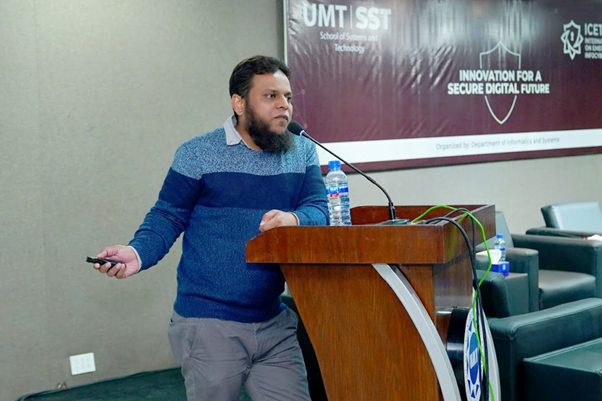
Dr. Waqas Tariq Toor, Associate Professor and Chairman at the University of Engineering and Technology (UET) Lahore, Narowal Campus, opened Session I with a comprehensive and insightful presentation on "Evolution of IoT Through LTE to 5G and Beyond." Dr. Toor walked attendees through the remarkable technological journey of the Internet of Things. He described how 5G is not simply a faster version of 4G, but a fundamental reimagining of network architecture, one that enables real-time machine-to-machine communication, ultra-low latency, and massive device density. Smart cities, autonomous vehicles, industrial automation, precision agriculture, all of these depend on the kind of connectivity that 5G and its successors will provide. Looking further ahead, Dr. Toor offered a compelling glimpse into the research frontiers of 6G, where the boundaries between the physical and digital worlds begin to dissolve entirely. His presentation was a reminder that the devices we connect today are just the beginning, and the network that carries them will shape everything.
Dr. Muhammad Fahad Zia — Assistant Professor, American University in Dubai
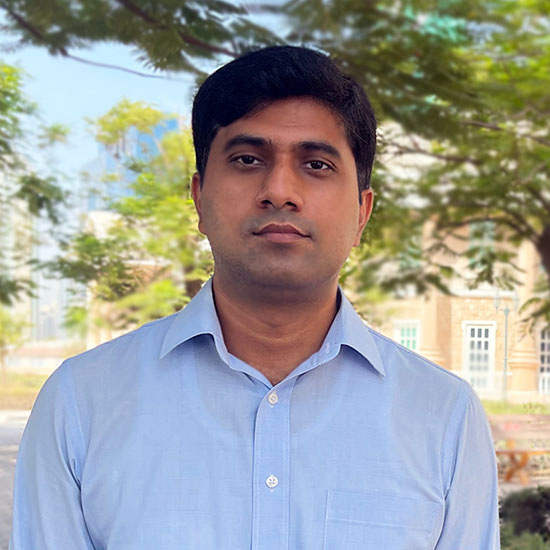
Mr. Abid Ali — Beijing Institute of Technology, China
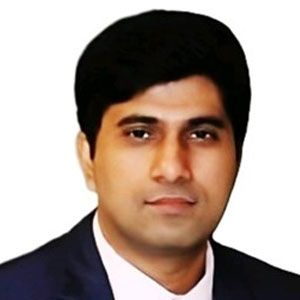
The second presentation of Session I came in the form of a recorded international collaboration, a fitting reflection of the global reach of ICETI 2025. Dr. Muhammad Fahad Zia from the American University in Dubai, joined by Mr. Abid Ali from the Beijing Institute of Technology in China, presented their research on "Advance Deep Learning for Anomaly Detection in Smart Grids."
Together, they painted a picture of a world increasingly dependent on smart energy infrastructure, grids that are intelligent, interconnected, and, as a consequence, newly vulnerable. Faults in equipment, irregular consumption patterns, and deliberate cyberattacks can all introduce anomalies into the system, with potentially cascading consequences. Their research demonstrates how advanced deep learning models, including recurrent neural networks and autoencoders, can be trained to detect these anomalies in real time, giving grid operators the intelligence they need to act before disruption occurs. It was a presentation that connected artificial intelligence to one of the most fundamental needs of modern society: reliable, secure energy.
The morning's sessions concluded, and attendees paused for Lunch and Prayer, a welcome opportunity to rest, reflect, and reconnect. The conversations over lunch were animated, with the morning's presentations still fresh in the minds of researchers and students alike, sparking debates and questions that would carry into the afternoon.
Session II — Technical Presentations
Session Chair: Dr. Ghulam Mustafa
Assistant Professor & Program Manager BSIT | HEC Approved Supervisor, Department of Informatics and Systems, School of Systems and Technology, UMT
The afternoon session opened under the chairmanship of Dr. Ghulam Mustafa, whose expertise in High Performance Computing, Cloud Computing, and Machine Learning places him squarely at the intersection of the themes that define Session II. As Program Manager for the BSIT program and an HEC Approved Supervisor, Dr. Mustafa is deeply invested in shaping the next generation of technology professionals in Pakistan. His published research covers data security, cryptographic techniques in IoT, and cybersecurity countermeasures for web systems, making him an ideal guide for an afternoon of presentations that would explore AI, connectivity, and digital transformation from multiple angles.
Online Session of Mr. Hassaan Idrees — Ph.D. Researcher, IMT School for Advanced Studies Lucca, Italy
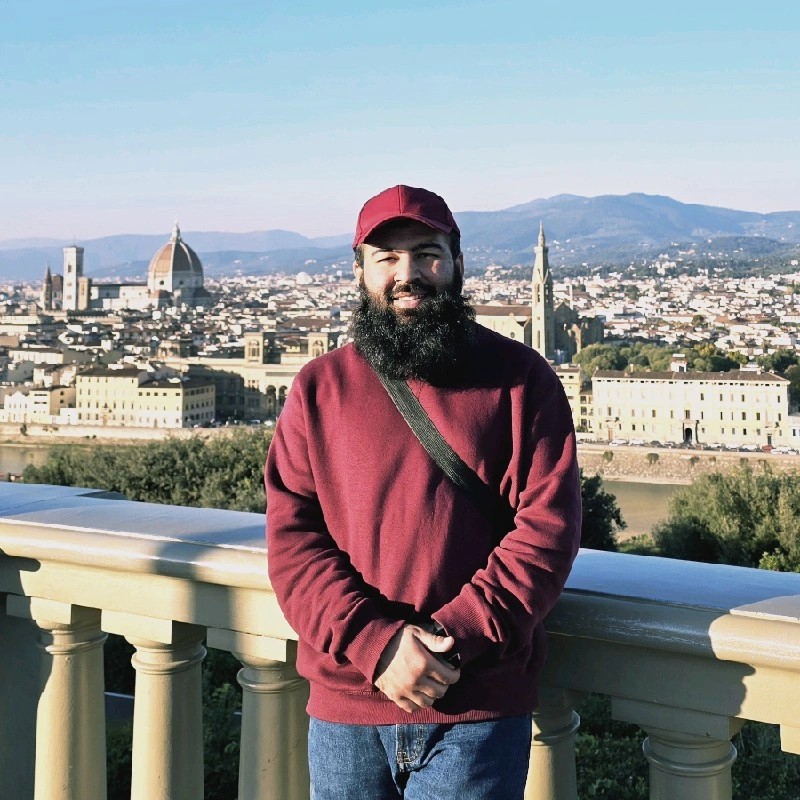
The afternoon began with Mr. Hassaan Idrees joining the conference virtually from Lucca, Italy, a moment that illustrated perfectly the international character of ICETI 2025. His presentation on "Physics Informed Neural Networks (PINNs): AI for Science and Engineering" introduced attendees to a frontier of artificial intelligence that goes far beyond pattern recognition and prediction.
PINNs are neural networks with a difference: rather than learning purely from data, they are embedded with the governing physical laws of the system they model, the equations of fluid dynamics, heat transfer, structural mechanics, and more. The result is a class of AI that does not just approximate, it understands the physics of what it is simulating. Mr. Idrees walked the audience through applications in engineering simulations, climate modelling, and materials science, demonstrating how PINNs are dramatically accelerating the pace of scientific discovery.
On Campus — Mr. Kashif Basheer — Chair, IEEE Society COMSOC, Lahore Section
Mr. Kashif Basheer, Chair of the IEEE Communications Society (COMSOC) Lahore Section, brought a different but equally vital dimension to Session II with his presentation on the "Role of IEEE in Research." In a room full of researchers and aspiring academics, his talk landed with practical force.
He introduced the audience to IEEE not just as a professional body but as a living ecosystem for researchers, one that offers publication platforms, technical standards, networking events, and a global community of peers. He spoke candidly about how early-career researchers in Pakistan can leverage IEEE membership to amplify the reach and impact of their work, access cutting-edge literature, and connect with international collaborators.
Mr. Umair Sabihullah — CTO, codentropy.ai
Session II closed with Mr. Umair Sabihullah, Chief Technology Officer at codentropy.ai, whose presentation on "Accelerating the Health Industry Using AI" brought the afternoon's discussions into one of the most consequential arenas of our time: healthcare.
Mr. Sabihullah explored how artificial intelligence is no longer a futuristic concept in healthcare, it is already here, reshaping how diseases are diagnosed, how treatments are personalized, and how healthcare systems manage their resources. From intelligent diagnostic tools that can detect conditions from medical imaging with greater accuracy than traditional methods, to AI-driven patient management systems that reduce wait times and improve outcomes, the transformation is underway and accelerating.
Workshops
Session Chair: Dr. Nisar Ahmed
As the technical presentations of Session II concluded, ICETI 2025 transitioned into its workshop block, a hands-on, skills-focused series of sessions chaired by Dr. Nisar Ahmed. Where the earlier sessions had painted the big picture of technology's future, the workshops were designed to put tools directly in the hands of attendees. Three facilitators, each an expert in their domain, guided participants through practical sessions that they could carry immediately into their professional and academic lives.
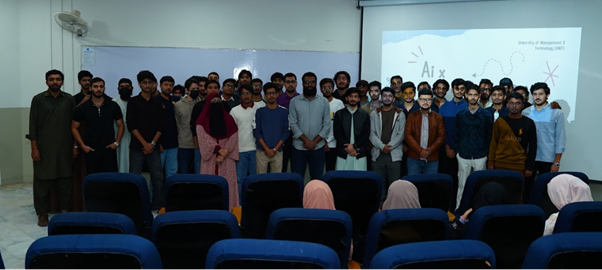
Mr. Imran Nawaz — Senior Network Administrator, University of the Punjab, Lahore
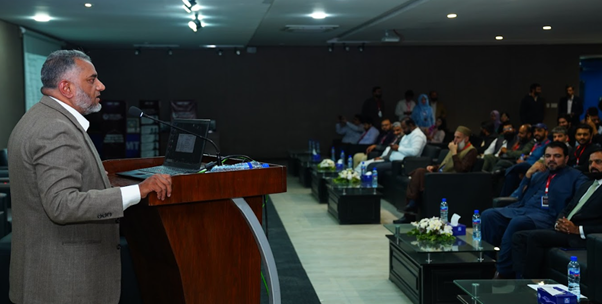
Mr. Imran Nawaz opened the workshop block with "Cyber Warrior: Empowering Security Professionals", a session that was as engaging as it was eye-opening. Drawing from years of experience managing the network infrastructure of one of Pakistan's largest universities, Mr. Nawaz took attendees inside the mind of both the attacker and the defender.
Through real-world attack scenarios and live demonstrations, he walked participants through the tactics, techniques, and procedures that cybercriminals use, and the defensive frameworks that security professionals deploy to counter them. He emphasized that becoming a cyber warrior is not just about technical skill; it is about mindset, vigilance, and the discipline to stay ahead of threats that are constantly evolving.
Mr. Naveed Hussain — Lecturer, Department of Informatics and Systems, UMT
Mr. Naveed Hussain, Lecturer in the Department of Informatics and Systems at UMT, followed with a workshop on "Verifying Software Integrity & Understanding Malware", a topic that sits at the heart of digital trust in today's software-driven world.
In an era where software underpins everything from banking systems to hospital equipment, the ability to verify that software has not been tampered with, and to recognize when malicious code has infiltrated a system, is a critical professional skill. Mr. Hussain guided participants through the technical processes of integrity verification and malware analysis, combining conceptual explanations with live demonstrations that brought the subject to life.
Mr. Ghulam Murtaza — Lecturer, Department of Informatics and Systems, UMT
The final workshop of ICETI 2025 belonged to Mr. Ghulam Murtaza, whose session on "Automate Anything: An Intro to No-Code Workflows with N8N & Make.com" brought a burst of energy and enthusiasm to close the afternoon.
In a world where time is the scarcest resource, automation is the great equalizer, and Mr. Murtaza made it accessible to everyone in the room, regardless of their coding background. Through live, hands-on demonstrations using N8N and Make.com, he showed attendees how to build powerful automated workflows that connect apps, eliminate repetitive tasks, and free up human attention for work that truly requires it. From automating email responses and data collection to building multi-step business workflows without writing a single line of code, the session was a revelation for many in attendance.
Closing Ceremony — Closing Remarks & Presentation of Souvenirs
Dr. Kashif Ishaq — Acting Chairperson, Department of Informatics and Systems | Assistant Professor & HEC Approved PhD Supervisor | Member IEEE, School of Systems and Technology, UMT
As the clock approached 5:00 PM, the energy in Hakeem Saeed Hall gathered itself for one final, meaningful moment. Dr. Kashif Ishaq, Acting Chairperson of the Department of Informatics and Systems, took the floor to deliver the closing remarks of ICETI 2025.
Dr. Ishaq's own journey speaks to the spirit of the conference he was closing. Holding a PhD in Computer Science from Universiti Kebangsaan Malaysia and an MS in Information Technology from UMT, his research spans Serious Games, Gamification, Educational Technologies, Mobile Assisted Language Learning, and Computer Networks and Security, a portfolio that bridges the human and the technological in ways that are both creative and impactful. With over 649 citations and recognition as an HEC Approved PhD Supervisor and Member of IEEE, he carries the kind of academic authority that gives his words real weight.
In his closing remarks, Dr. Ishaq took a moment to look back at the day, and it was a day worth reflecting on. From the spiritual grounding of the morning's recitation, through the urgency of the keynote, the depth of the technical sessions, and the practicality of the workshops, ICETI 2025 had delivered on its promise to be a conference that informs, challenges, and inspires. He thanked every keynote speaker, presenter, workshop facilitator, session chair, and volunteer by name and in spirit, acknowledging that a conference is only as good as the people who show up and give it everything they have.
He reminded the students in the room that the knowledge they had gathered today was only valuable if they acted on it, in their research, in their careers, and in their contributions to Pakistan's digital transformation. And he closed with a promise: that the Department of Informatics and Systems would continue to create spaces like ICETI, where curiosity meets expertise, and where the future is not just discussed but actively built.
Souvenirs were then presented to all distinguished speakers, workshop facilitators, and guests, a small but sincere expression of gratitude for the knowledge they had shared and the time they had invested in ICETI 2025.
The organizing committee extended heartfelt gratitude to all participants, volunteers, and faculty members whose collective effort made ICETI 2025 a resounding success.
We look forward to welcoming you again, greater in number, richer in ideas, and stronger in purpose.
The formal proceedings of ICETI 2025 concluded with a group photograph, speakers, session chairs, organizers, students, and faculty standing together as one community, united by a day of shared learning and purpose. It was a moment worth capturing. As the cameras clicked and the evening light settled over UMT, conversations continued over tea, ideas still flowing, connections still forming, and the spirit of ICETI 2025 very much alive.